
Last updated 26 November 2026
Use the survey to settle sizes, styles and the scope of work
Before replacement windows can be priced accurately or made to order, someone needs to see the openings in person. The survey is where sizes are taken, the condition of the existing frames is noted and your preferences are turned into a specification. Knowing what to expect means you can prepare, ask the right questions and get a quotation that reflects exactly what you want.
At a glance
- Why a survey comes before a firm price
- What gets measured
- Checks beyond the measurements
Why a survey comes before a firm price
Every window opening is slightly different, even in houses that look identical from the street. Brickwork settles, previous fitters leave varied gaps, and sills or reveals may have been altered. A price worked out from rough sizes over the phone can only ever be an estimate, because the details that affect the job are only visible on site.
The survey removes that guesswork. It records the true size of each opening, how the old frames are fixed, what the walls are made of and whether anything unusual will need attention. With that information the quotation can describe the work properly, and the windows can later be manufactured to sizes that fit.
What gets measured
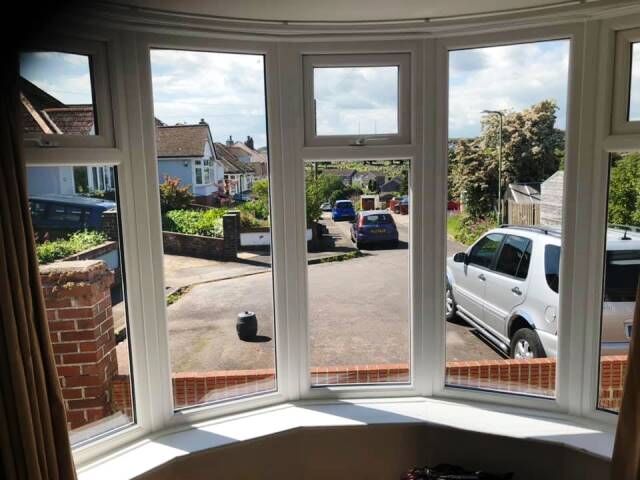
Each opening is measured in width and height at more than one point, because few openings are perfectly square. The surveyor notes the depth of the reveal, the type of sill, whether there is a cavity or solid wall, and how the existing frame sits within the brickwork. Bay and bow windows are measured section by section, including the angles between them.
The positions of sashes and opening lights are recorded too, along with which side each window hinges from. If you would like to change the layout, such as swapping a fixed pane for an opening one, this is when it is noted. Our guide to window opening styles and handing explains the choices if you want to think about them beforehand.
Checks beyond the measurements
A good survey looks past the frame. The surveyor will look for signs of a missing or failed lintel above the window, cracked render, damp patches around reveals or rotten timber in old frames. These are not reasons to panic, but they can affect the fitting method and need to be identified before the job is planned rather than discovered on fitting day.
Safety and regulation points are also considered. Bedrooms on upper floors may need windows that open wide enough for escape, low-level glazing may need safety glass, and rooms with no other ventilation may need trickle vents. Access matters too: scaffolding, narrow side paths or conservatory roofs below a window can all change how the work is carried out.
The questions you will be asked
Expect questions about style, colour and glass. Do you prefer casement, sash-style or tilt and turn windows? White, a woodgrain foil or a grey finish? Do any rooms need obscured glass, Georgian bars or acoustic glazing? You will also be asked about handles, locks, restrictors and whether you want the new frames to look like the old ones or change the character of the house.
There are practical questions as well, such as whether internal sills should be replaced, whether curtains or blinds will need taking down, and whether any rooms have furniture that is hard to move. Honest answers help the quotation describe the full job, so nothing comes as a surprise later.
How long it takes and who should be there
The length of a survey depends on the number of windows and how complicated they are. A handful of standard openings takes far less time than a whole house with bays and upstairs access issues. Allow enough time that you are not rushed, because the conversation about options is just as important as the tape measure.
It helps if whoever makes the decisions in the household can be present, so preferences are agreed in one visit. Have any paperwork for previous windows to hand, particularly if the property is listed, in a conservation area or a leasehold flat. Those details can affect what is allowed and are best raised at the start.
From survey to written quotation
After the visit, the measurements and choices are turned into a written quotation. It should list each window, its style, colour, glass and hardware, together with what the price includes, such as removing the old frames, making good inside and outside, and taking away waste. Read it line by line and ask about anything that is unclear.
Our guide to comparing window and door quotes explains how to put two or more quotations side by side fairly. Once you are happy and the order is confirmed, final measurements are checked before the frames are manufactured, because the windows are made to measure rather than taken from stock.
Getting the most from the visit
Walk round the house beforehand and note what annoys you about each window: draughts, stiff handles, condensation or rooms that are hard to ventilate. Look at windows on neighbouring houses that you like. Clear the area in front of each window enough that it can be reached, and make sure pets are settled so doors can be opened safely.
Most of all, use the survey to ask questions. Ask how the work will be sequenced, how long fitting is expected to take and what you need to do before the day. Our free surveys are a no-obligation way to get firm answers, and the uPVC windows page shows the styles and finishes that can be discussed.
Sources and further reading
Discuss your home with County Windows
Explore our uPVC windows or request a quotation for your property. Explain your priorities and the condition of the existing openings so the survey can establish an appropriate specification.