
Last updated 24 November 2026
Agree the finishing details as clearly as the frames themselves
When people choose new windows they focus on frames, glass and handles, then notice the sills and trims only once the work is done. These finishing pieces shape how the windows look and how well they shed rain. This guide explains what each part does and which questions help you know exactly what is included before ordering.
At a glance
- The parts around a window
- External sills and rainwater
- Internal window boards
The parts around a window
An external sill sits beneath the frame outside and throws rainwater clear of the wall below. Internally, a window board forms the shelf you place plants or ornaments on. Trims, sometimes called cover strips or architraves, conceal the joint between the new frame and the surrounding wall. Each one is a separate item with its own choices.
On some homes the external sill is stone, brick or concrete and stays in place, with the new frame sitting on top. On others, a sill is supplied as part of the new window. Knowing which applies to each opening helps you read a quotation properly.
External sills and rainwater
The job of an external sill is to carry water away from the frame and drip it clear of the wall. A sill that is too short, poorly angled or badly sealed can let water run down brickwork or soak into render. On exposed Devon elevations facing coastal weather, this matters more than its appearance.
Where an original stone or masonry sill remains, the installer will consider how the new frame meets it. Old sills sometimes have cracks or worn edges, and dealing with those may fall outside window replacement. Ask whether any work on existing masonry sills is proposed or excluded.
Internal window boards
Inside, the window board finishes the reveal beneath the frame. When old frames are removed, the existing board may be damaged or simply look tired against new white or coloured frames. Some homeowners keep their existing timber or tiled sills; others choose a new board for a tidy, matching finish.
If you have deep reveals in older stone cottages or solid-walled houses, boards may need to be wider than usual. Mention any sills you particularly want to keep, such as a tiled sill in a bathroom, so the installers can plan around them rather than removing them by default.
Trims and finishing the joint
Removing old frames almost always disturbs the plaster or render nearby. Trims cover the joint neatly inside and sometimes outside. They are a quick, clean finish, but some people prefer the reveal to be made good with plaster instead. Ask which approach is proposed and who handles any decorating afterwards.
Trims come in colours to match the frames. On a white frame with white trims the effect is discreet; on a coloured or woodgrain frame, matching trims help the window look intentional. Consider how trims will meet existing skirting, tiles or curtain fittings.
Bay windows and awkward reveals
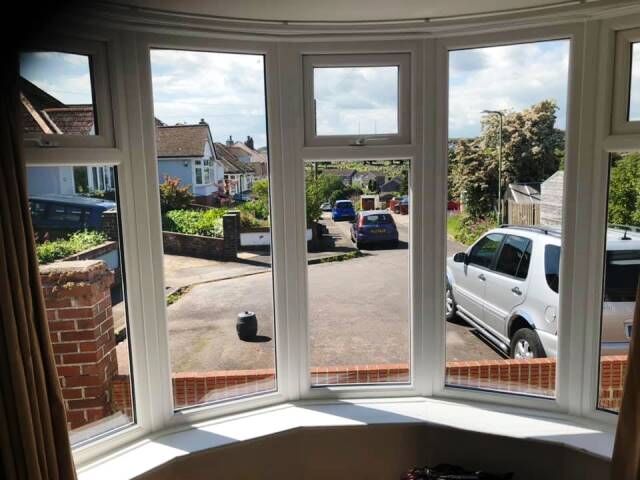
Bay windows have angled corners and often a wide internal board shaped to the bay. That board can be a striking feature or a dated one, depending on its condition. When replacing a bay, ask how the board, corner posts and any trims will be finished so the whole bay looks considered.
The bay window replacement guide covers the structural questions that bays raise. From a finishing point of view, take photographs of the existing internal sill and reveal so you can compare options and decide whether to retain or replace them.
Matching colours and materials
If you choose coloured or woodgrain windows, sills and trims usually need to match. The colours and finishes guide explains how frame colour choices work. A mismatch between a grey frame and a white sill can look unfinished, so confirm the colour of every external sill and trim on the quotation.
For heritage-style homes, ask whether a deeper sill profile suits the house better than a slim one. Small proportions matter on older properties, especially on prominent front elevations. The sash and casement window pages show how different styles sit in traditional openings.
What to check on a quotation
Look for each opening's sill arrangement: new external sill, existing sill retained, new internal board or existing board kept. Check trims inside and out, and whether making good with plaster is included. Clarity here prevents surprises on fitting day and makes it easier to compare quotations fairly.
County Windows can explain the finishing proposed for each window during a survey. Point out anything you care about, such as a favourite tiled sill, a wide board for plants or a reveal you want plastered rather than trimmed. Those details make a real difference to how the finished room feels.
Sills on older and rendered homes
Many Devon houses are rendered, and the junction between a sill and render can be a weak point for water if it is poorly finished. When frames are replaced, ask how the new sill will meet the existing render and whether any patching is included. Render work itself is often a separate job, so clarity avoids misunderstandings.
Older cottages may have uneven reveals and walls that are far from square. Sills and boards sometimes need careful scribing to sit neatly. Mention any unusual openings at survey so the finishing can be planned rather than improvised on the day.
Sources and further reading
Discuss your home with County Windows
Explore our uPVC windows or request a quotation for your property. Explain your priorities and the condition of the existing openings so the survey can establish an appropriate specification.